Case study
Independent · Founder & builder · 2026
Scroll2Stove
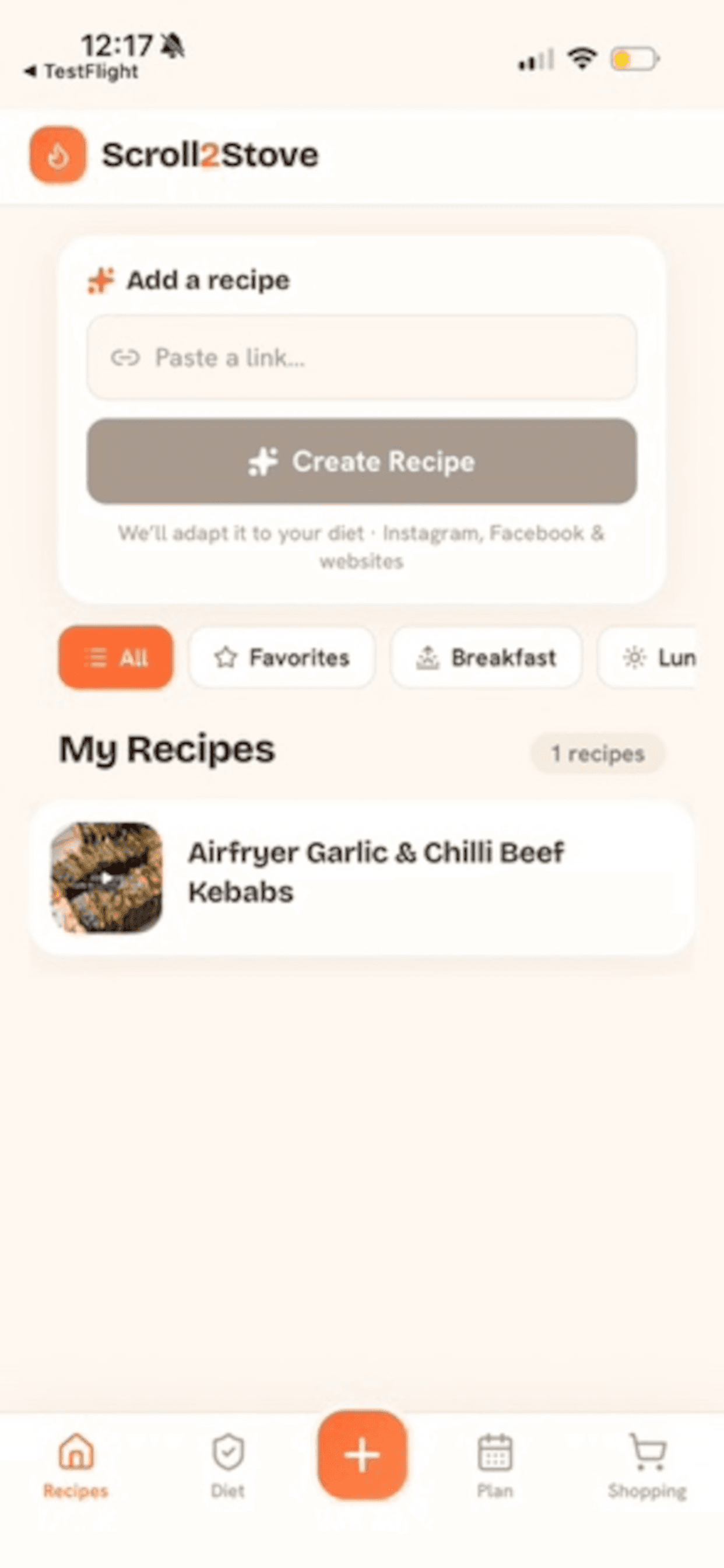
An AI recipe app that imports recipes from Instagram, Facebook, and the web, then rewrites the ingredients to fit your allergies and diet.

The problem
Recipes live in Instagram captions and ad-heavy blogs, not in a format you can cook from. And for anyone with an allergy or diet, every saved recipe raises the same question: can I eat this?
What I did
Set up how I'd work with AI before building
I chose Cursor for building, Claude Design for the interface, Firebase for the backend, and GitHub for version control. Then I researched how to structure the project files the AI reads: skills, Markdown docs, and CLAUDE.md. Improving those files, and how I worked out requirements with the AI, produced the final spec.
Built a focused first version
Imports check for structured recipe data first, then fall back to AI extraction through Firebase Cloud Functions. Timers come from the recipe steps, and nutrition comes from USDA data. I cut a photo-scanning feature to focus on importing from links.
Tested on TestFlight and fixed what testers found
Three family members tested the app, all heavy social media users and food lovers. I asked about usability first, then what didn't work. After testing, I added sharing straight from Instagram and a progress screen for imports. I also fixed a paywall loop that lost the pasted link, and wrong ingredient amounts from Instagram posts.
Replaced the AI-generated look with a design system
The first interface looked machine-made. I built a design system from a Claude Design handoff and applied Apple's and Google's interface and tone guidelines. The redesign shipped in four planned steps.
Worked through six App Store rejections
Apple rejected the app six times, mostly under Guideline 4.3(a), as too similar to other recipe apps. Each rejection forced another pass on what made the app different. I audited all 22 App Store claims against the code and found that dietary adaptation, the strongest feature, appeared nowhere in the listing.
Rebuilt the app around adapting recipes
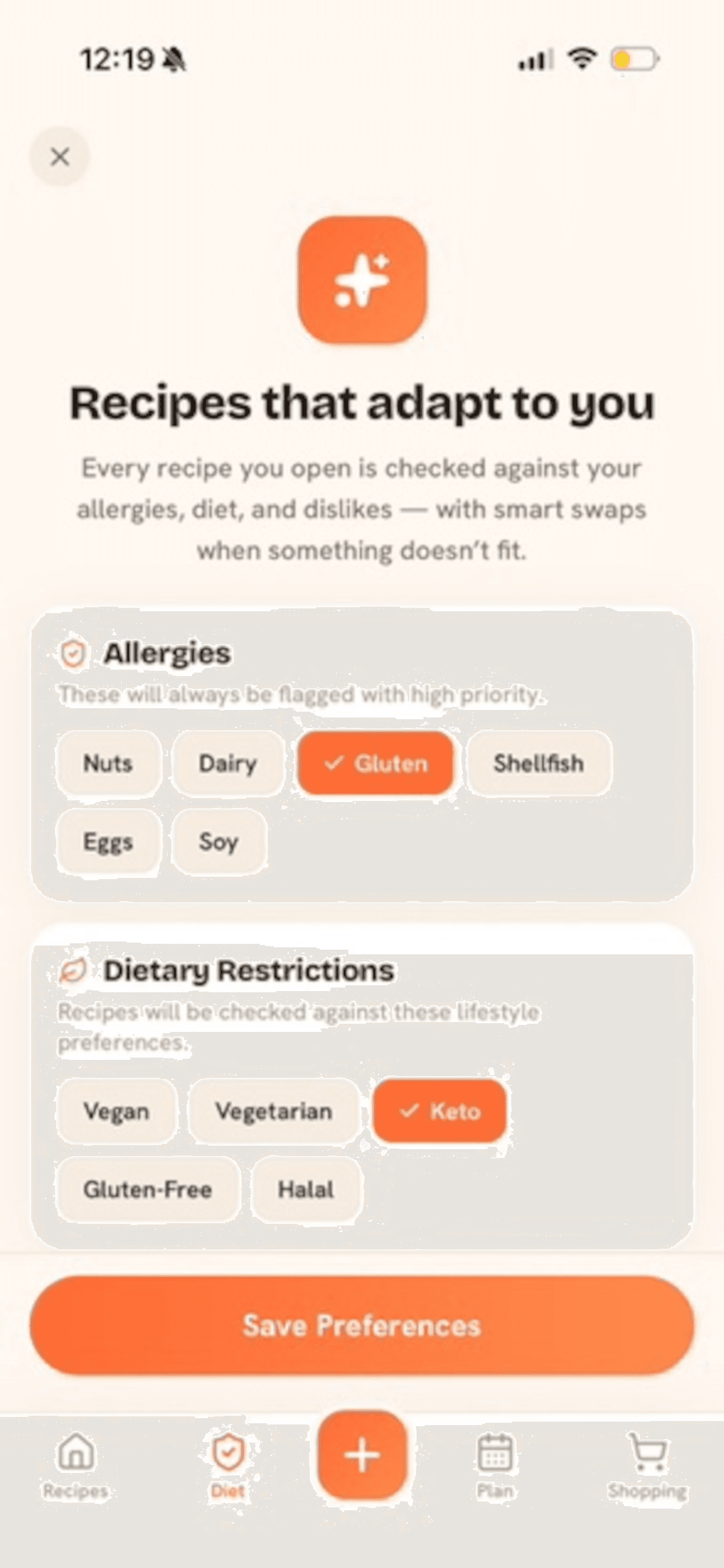
The answer was recipes that adapt to you. I added diet preferences at onboarding, flags on conflicting ingredients, and one-tap substitutions you can undo. A weekly meal plan sends adapted recipes to the shopping list. When reviewers couldn't find the subscription, I added always-visible paywall entry points and five free saves.
Matched each AI task to the right model
None of the tasks needed a high-reasoning model, so I picked the model that did each job well for less. Claude extracts recipes. Spoonacular suggests substitutions first, with Claude as a fallback. GPT-4o-mini flags ingredients and adapts recipes.
The outcome
Scroll2Stove is live on the App Store with a $4.99 premium subscription. The App Store subtitle, onboarding, paywall, and review notes all lead with the same promise: recipes adapted to your diet.
A rejection is product feedback. Six rejections forced me to answer why the app should exist. Each answer moved it from saving recipes to adapting them to diets and health conditions.
The spec is the product work. The AI built better when my project files and requirements were better. Most of my gains came from improving the setup before building.
Match the model to the job. None of the tasks needed a high-reasoning model. Choosing a model is a cost and quality decision, like any other build choice.